
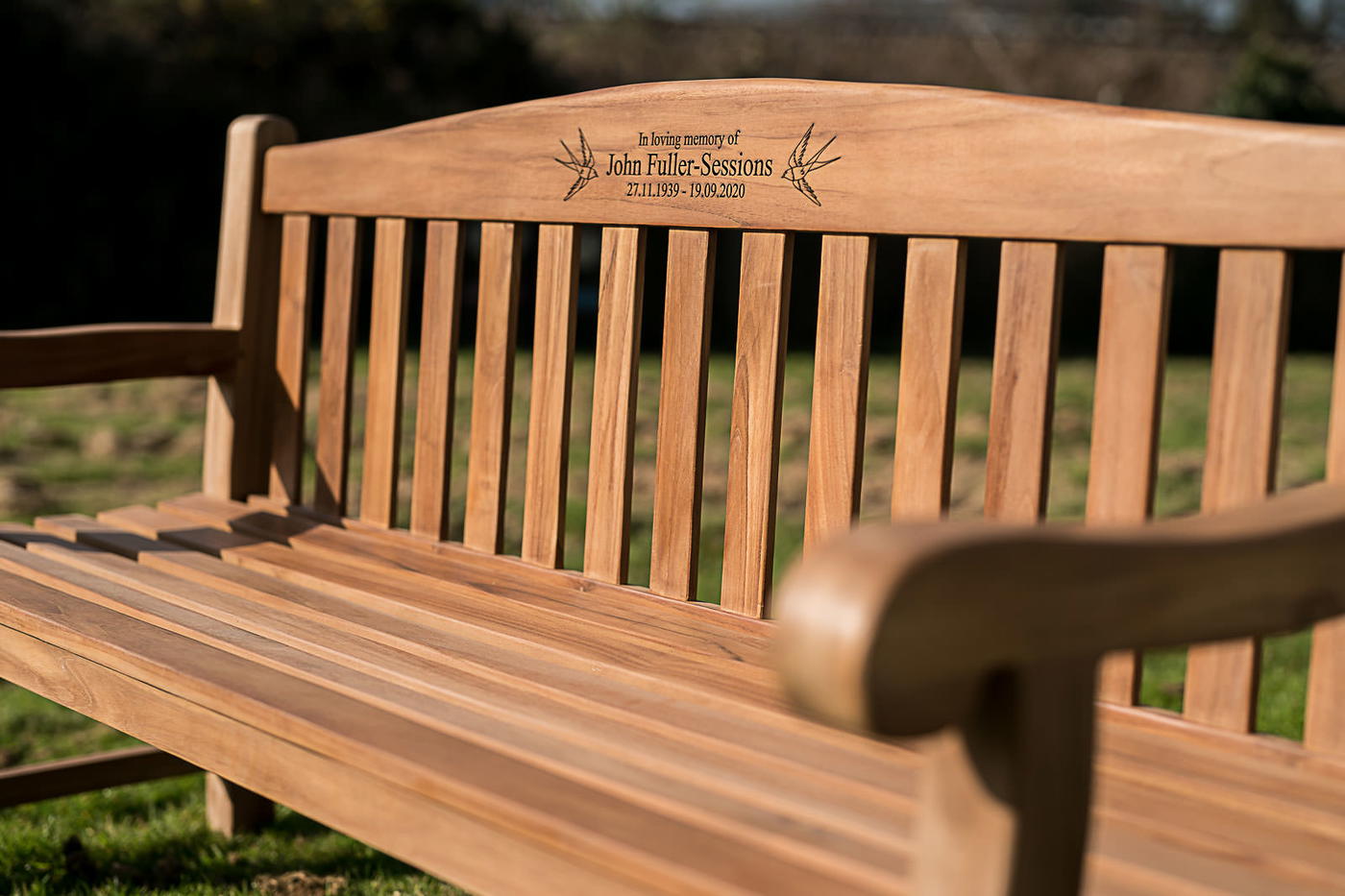
A memorial bench is more than a piece of garden furniture. It marks a place, a person and a set of memories, and it is often visited most in the quieter, colder months when people want a moment to sit and reflect. Naturally, many families ask us how to keep their bench looking cared for through a British winter.
The good news is that solid teak is one of the most forgiving timbers you can choose for an outdoor bench. It is dense, naturally rich in oils and highly resistant to rot, so it does not need to be brought indoors or wrapped up for the season. A little attention before the weather turns, and a few checks through the winter, are all it takes.
Here is our practical guide to winter care for a teak memorial bench, including advice for engraved lettering and for brass and stainless steel plaques.
Why Teak Copes So Well With Winter
Teak has been used for boat decks and outdoor furniture for centuries because of how it behaves in wet, cold conditions. Its natural oils and tight grain help it resist moisture, fungal decay and insect damage, and it is very stable, so it is less prone to warping or splitting as temperatures rise and fall.
That means a well made teak bench can stay outside all year round, in a garden, churchyard, park or clifftop, without coming to harm. What winter does bring is dirt, fallen leaves, damp and, in shaded spots, green algae. These are cosmetic issues rather than structural ones, but they are worth keeping on top of, particularly for a bench that carries a name or message.
Before Winter: An Autumn Clean
The best thing you can do for your bench is give it a gentle clean in autumn, before the wettest months set in.
- Brush off loose debris. Use a soft brush to remove leaves, twigs and dust, paying attention to the gaps between slats where debris can collect and hold moisture.
- Wash with mild soapy water. Warm water with a little washing up liquid and a soft brush or sponge is plenty. Work along the grain rather than across it.
- Rinse with clean water and let the bench dry naturally.
Avoid pressure washers. It is tempting to blast a bench clean, but a pressure washer can strip the soft fibres from the surface of the timber, leaving it rough and furry, and it can damage engraved lettering. A soft brush does a far better job over the long term.
If the bench has been oiled in the past, there is no need to re-oil it going into winter. Oil applied in cold, damp conditions does not cure properly and can encourage mould spots. If you prefer a honey coloured finish, save oiling for a dry spell in late spring.
Through the Winter: Simple Checks
Every few weeks, or whenever you visit, it is worth a quick look over the bench.
Clear Leaves and Standing Debris
Wet leaves left sitting on the seat or wedged between slats hold moisture against the timber and can leave dark marks. Brushing them away is the single most useful winter habit.
Keep an Eye on Moss and Algae
Benches under trees, beside hedges or in north facing spots can pick up a green film over winter. It will not harm the teak, but it can make the seat slippery and dull the look of the bench. A soft brush and soapy water will usually lift it. For more stubborn growth, a dedicated teak cleaner can be used on a mild, dry day, following the manufacturer’s instructions.
Snow and Frost
Teak is not damaged by frost or snow. If snow settles on the bench, simply brush it off with a soft brush. Never chip at ice with a scraper or anything sharp, as this can gouge the timber and lettering. Let it melt naturally instead.
If the bench sits near a path that is gritted or salted, try to keep de-icing salt from piling up around the legs, and rinse off any splashes when the weather improves.
Check Fixings After Storms
Our benches are built with sturdy joints and quality fixings, but it is good practice to check that bolts are snug and that any ground anchors or fixings are secure, especially after high winds. This matters most for benches in exposed coastal or hilltop locations.
Mind the Ground Beneath
Drainage around the feet makes a real difference over winter. If the bench stands on grass or soil, the feet can sit in waterlogged ground for weeks. Placing it on a paved slab, gravel or a firm, well drained base helps keep the end grain of the legs dry.
Should You Cover a Memorial Bench?
Generally, no. Teak does not need a cover, and memorial benches in public places are usually best left uncovered so that they can still be used and visited.
If your bench is in a private garden and you would like to protect it, only use a breathable cover designed for outdoor furniture. Plastic sheeting traps condensation against the wood and can cause mould. Make sure the cover does not sit directly on the seat in a way that holds pooled water.
Caring for Engraved Lettering
Many of our memorial benches are engraved directly into the timber. Because the lettering is cut into solid teak, it is part of the bench itself and will last as long as the bench does.
Over winter, dirt, algae and fine debris can settle into the grooves. To keep the wording clear:
- Use a soft toothbrush or small soft bristled brush with mild soapy water to work gently along each letter.
- Rinse with clean water and allow to dry.
- Avoid wire brushes, scourers or sharp tools, which can blur the edges of the engraving.
As teak weathers, it naturally turns a soft silver grey. Engraved lettering weathers along with it, so the contrast between the letters and the surface may soften over time. Many families love this gentle, aged look. If you would prefer the lettering to stand out more crisply, a teak cleaner used in spring can lift the surface back towards its original warm tone, which helps the engraving read more clearly again.
Caring for Brass Plaques
Brass is a classic choice for a memorial plaque and develops character over time. Left alone, it will gradually tarnish and darken to a warm, antique tone, which many people feel suits a memorial perfectly.
If you would like to keep it bright:
- Wipe the plaque with a soft cloth and mild soapy water, then dry it thoroughly.
- Use a good quality brass polish sparingly, applied with a soft cloth, if you want to restore the shine.
- Mask or protect the surrounding timber when polishing, as polish residue can mark the teak.
- If the plaque has a lacquered finish, skip the polish and stick to gentle washing, as abrasive polish will remove the lacquer.
Winter is a good time to give brass a simple wipe, as damp air and rain can speed up tarnishing.
Caring for Stainless Steel Plaques
Stainless steel is extremely low maintenance and keeps a clean, modern look for many years. It is particularly well suited to exposed locations.
That said, in coastal areas salty air can occasionally leave light brown surface marks on stainless steel, often called tea staining. This is surface deposit rather than rust damage and is easily removed.
- Wipe the plaque regularly with warm soapy water and a soft cloth, then dry it.
- For any marks, use a stainless steel cleaner and wipe in the direction of the brushed finish.
- Avoid wire wool or abrasive pads, which can scratch the surface and make it more prone to marking.
If your bench overlooks the sea, a quick wipe once a month through winter will keep the plaque looking its best.
A Spring Refresh
When the weather improves, give the bench another wash to remove the winter’s grime. This is also the right time to decide how you would like it to look for the year ahead. You can leave the teak to settle into its natural silver grey patina, which needs no further treatment, or clean and oil it to bring back a warmer golden tone. Either way, the timber will be perfectly protected.
Winter Care at a Glance
| Task | When | How |
|---|---|---|
| Autumn clean | Before winter | Soft brush, mild soapy water, no pressure washer |
| Clear leaves and debris | Every visit | Soft brush, check between slats |
| Moss and algae | As needed | Soapy water or teak cleaner on a dry day |
| Snow | As needed | Brush off gently, never chip ice |
| Check fixings | After storms | Tighten bolts, check ground anchors |
| Engraved lettering | Every few weeks | Soft toothbrush and soapy water |
| Brass plaque | Monthly | Wipe, polish if desired, protect the timber |
| Stainless steel plaque | Monthly | Wipe, stainless cleaner for marks |
| Oiling | Late spring only | Never in cold, damp conditions |
Frequently Asked Questions
Can a teak memorial bench stay outside all winter?
Yes. Solid teak is naturally resistant to rot, moisture and frost, so it can stay outside all year without being moved or wrapped.
Will winter weather damage the engraving?
No. Engraved lettering is cut into the solid timber, so it is as durable as the bench itself. Simply brush out any dirt or algae from the grooves to keep it legible.
Should I oil my teak bench before winter?
We do not recommend it. Oil does not cure well in cold, damp weather and can encourage mould. If you want to oil your bench, wait for a dry spell in late spring.
Which plaque is better for a coastal location?
Both brass and stainless steel work well outdoors. Stainless steel is the lower maintenance choice for exposed coastal spots, while brass will develop a warm, antique patina over time unless polished.
Choosing a Remembrance Bench That Lasts
A memorial bench should be somewhere people can return to for years to come, whatever the weather. Our solid teak memorial benches are built to do exactly that, with the option of lettering engraved directly into the timber, or a brass or stainless steel plaque.
Explore our teak memorial bench range or get in touch with our team if you would like help choosing the right bench and personalisation.
